



Football Ticket Resellers Explained: How to Buy Safely in 2026
 ← Back to all articles
Football Ticket Resellers Explained: How to Buy Safely in 2026
If you've ever tried to get tickets to a sold-out Premier League match, a Champions League knockout or an FA Cup final, you've almost certainly ended up on a reseller site. They appear at the top of Google sponsored listings. They have the tickets the ticket office doesn't and depending on which one you land on, they're either a perfectly legitimate way to get into the stadium or a fast route to losing several hundred pounds.
This is the guide we wish more buyers had read before their first purchase. It explains what football ticket resellers actually are, how the marketplace model works behind the scenes, and the specific things to check before you hand over your card details.
What is a football ticket reseller?
A football ticket reseller is an online marketplace where individual ticket holders season-ticket members, hospitality clients, travelling supporters who can no longer attend list their tickets for sale to other fans. The reseller site doesn't own the tickets, it runs the platform, verifies the listings, processes the payment, handles delivery and acts as the point of contact if anything goes wrong.
This is fundamentally different from buying directly from a club or from a primary ticketing partner. Primary sellers issue tickets at face value. Resale marketplaces let market demand set the price, which is why prices can sit above or below the original face value.
The reseller model exists because demand for live football massively outstrips supply. Premier League season tickets carry multi-year waiting lists with a stadiums having maximum capacity. Champions League finals release a fraction of their seats to general public ballots. The Euro 2028 and World Cup 2026 ticket allocations were oversubscribed within hours. For most fans, most matches, the secondary market is the only realistic route in.
How the marketplace model actually works
Behind the scenes, a typical football ticket reseller website transaction looks like this:
A seller, usually a season-ticket holder lists their ticket on the platform.
The platform verifies the listing.
A buyer purchases.
The platform takes payment but doesn't release it to the seller yet.
The ticket is delivered electronically, by mobile transfer or in rare instances (in the modern era) by post.
Once the buyer has gained entry on matchday, the platform releases the funds to the seller.
The bit that matters: the platform holds the money in escrow. That's what makes a marketplace meaningfully safer than buying off a stranger through social media or a forum. If the ticket doesn't work at the turnstile, the buyer has options, assuming the reseller actually honours its guarantee.
That assuming is the whole game and separates trusted football ticket sites and the ones you should avoid.
The trust spectrum: not all resellers are equal
Football ticket resale sites sit on a spectrum. At one end you have established, well-resourced marketplaces with proper seller verification, real customer service, and money-back guarantees they actually pay out on. At the other end you have lookalike sites that take payment, deliver tickets that don't scan, and disappear behind an automated chatbot when things go wrong.
The frustrating part for buyers is that from the homepage, both types of site look almost identical. Slick design, urgency timers, glowing testimonials, "guarantees" splashed across the footer. The difference shows up in the small print, in the customer service experience, and — most reliably — in independent reviews.
This is why so many fans search specifically for trusted football ticket sites or reputable football ticket websites rather than just cheap ones. The cheapest listing on a sketchy site is worth nothing if the ticket fails at the gate.
Red flags that should look out for and cancel the transaction immediately
A few specifics that should make you close the tab:
- The site insists on bank transfer or cryptocurrency only.
- The guarantee only kicks in if you can prove fraud through a court process.
- Customer service is contactable only through a contact form.
- The price is dramatically below every other site for the same fixture. Good prices exist on the secondary market, but tickets at 30% of the going rate for a sold-out match are almost always too good to be true. Likewise any secondary sites offering face value for every listing is likely a scam site.
How resellers compare to the alternatives
It's worth being honest about the full landscape, because resellers aren't always the right answer.
Buying directly from the club: Always cheapest, always safest. But, almost always impossible especially for the top 6 Premier League Clubs.
Football ticket resellers (the secondary marketplace): A viable route when the official tickets are all sold out. Sometimes at much higher prices, but the selection of seats are great.
Social media and forum sales: Avoid. No platform protection, no recourse, very high fraud rate.
Where Love1Ticket sits in this
We're a secondary marketplace. We're completely transparent about that. Prices are set by sellers and can sit above face value. But we built the platform around the things buyers told us mattered:
- Every ticket is verified before it reaches you.
- Every order is backed by a 100% money-back guarantee.
- Our support team is staffed 24/7 by humans
- The price you see at checkout is the price you pay (all fees included). Nothing extra.
That's the model we'd recommend you look for whether you choose us or someone else.
If you want to see how we stack up against another operators, we've put together a direct comparison with other resellers covering all the details for pricing, guarantees, support and sports coverage.
Why are reseller prices higher than face value? Because demand exceeds supply. Sellers price based on what the market will pay. For high-demand matches like London derbies, Champions League knockouts, finals, prices can be several multiples of face value. For lower-demand fixtures, prices can sit at or below face value as kick-off approaches and sellers want to recoup something rather than nothing.
What happens if my ticket doesn't work at the turnstile? On a reputable marketplace with a real money-back guarantee, you contact support immediately, document the issue (a photo of the rejection screen helps), and await a replacement or a refund if no replacements are available. On a less reputable site, the support line tends to go quiet at exactly this moment, this is why the checklist above matters more than the headline price. Buy cheap, buy twice as they say.
What's the difference between a reseller and a ticket aggregator? A reseller (like Love1Ticket) holds the listings and processes the transaction directly. An aggregator (like SeatPick) doesn't sell tickets itself, it pulls listings from multiple resellers and shows them in one place, then sends you to the reseller to complete the purchase. Aggregators are useful for price comparison, but the trust check still applies to whichever underlying reseller you end up buying from.
How far in advance should I book through a reseller? For high-demand fixtures, listings appear weeks or months before kick-off and prices generally rise as the date approaches. There's no universal answer, it depends on the match and what's at stake.
Are the cheapest football ticket sites actually the cheapest? Not always. Headline prices can be misleading once delivery fees, service charges and currency conversion are added at checkout. The genuinely cheapest site is the one with the lowest all-in price you actually pay. Always click through to the final checkout total before comparing. This is where Love1Ticket operate a 100% transparent service, where the full cost is presented from the get go.
Browse verified football tickets
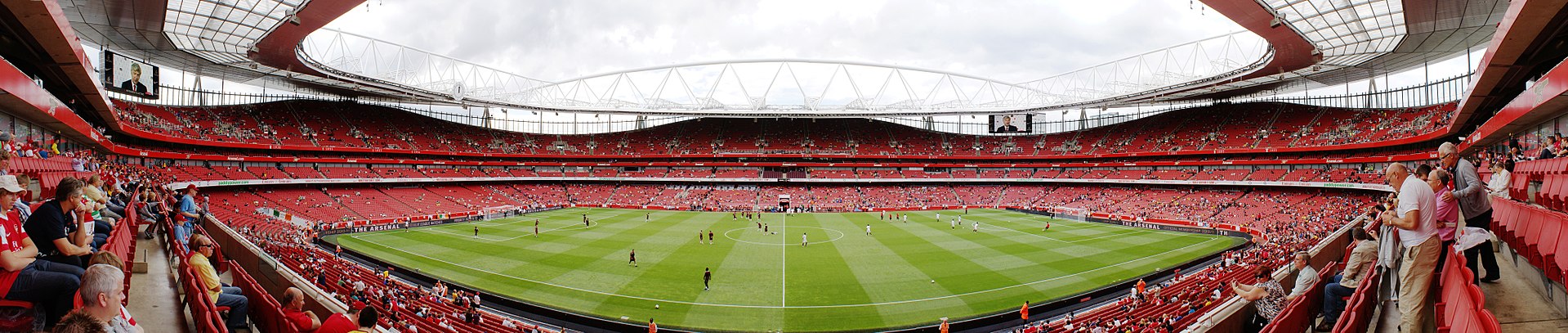
Image By Ed g2s - Own work, CC BY-SA 3.0, https://commons.wikimedia.org/w/index.php?curid=11096892