


Arsenal
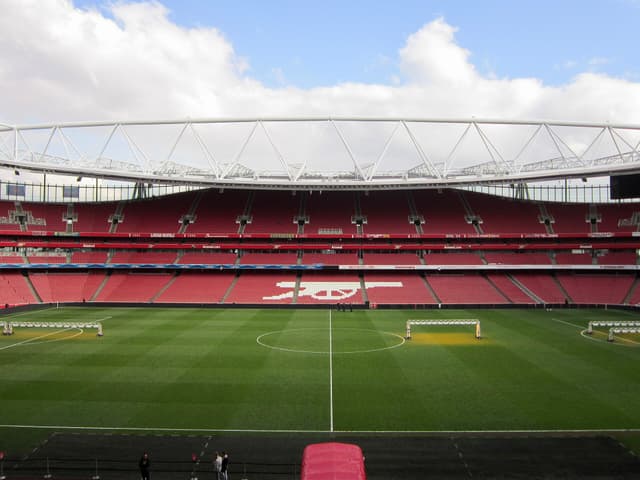
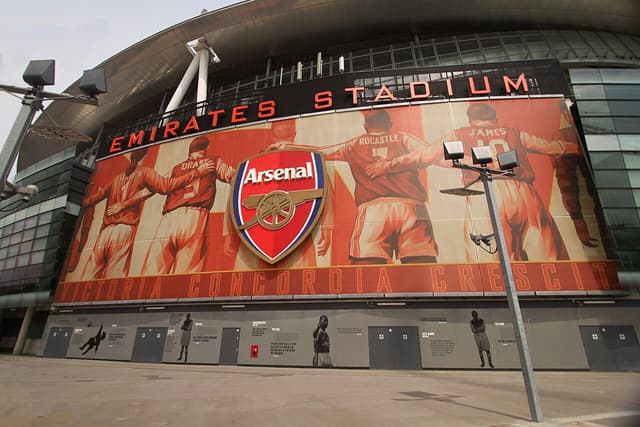
Explore Arsenal FC founding history, Emirates Stadium, iconic players, Premier League records and match day culture. The definitive hub for every Arsenal fan.
Arsenal Football Club is an institution built on grand traditions and a fierce identity. From the working-class munitions workers who founded it to the ex-player now manager, tactical mastermind Mikel Arteta that clinched the 2025/26 Premier League title.
Pre-Premier League Era
Arsenal was born in 1886 in Woolwich, South London, founded by a group of munitions workers at the Royal Arsenal factory. Originally named Dial Square, then Royal Arsenal, and later Woolwich Arsenal, the club’s identity has always been tethered to firepower and that's why they're known as "The Gunners". The canon on the crest is part of the history.
- The Move North (1913): Driven by financial struggle in the isolated south, visionary and controversial chairman Sir Henry Norris moved the club across the River Thames to Highbury, North London. This sparked the fierce, eternal rivalry with Tottenham Hotspur.
- The Herbert Chapman Revolution (1930s): Football’s first true modernizer, Chapman introduced the revolutionary "WM" formation, floodlights, numbered shirts, and even got the local Underground station renamed "Gillespie Road" to "Arsenal." He transformed them into the dominant force of the 1930s, winning five league titles.
- The George Graham "Boring, Boring Arsenal" Era (1986–1995): Graham built a terrifyingly disciplined defensive unit featuring the famous back four: Tony Adams, Lee Dixon, Nigel Winterburn, and Steve Bould. They specialized in the 1-0 win, the offside trap, and famously snatched the 1989 league title at Anfield in the final seconds of the season.
The Premier League Masterclass: Evolution & Data
The inception of the Premier League in 1992 paved the way for Arsène Wenger (1996–2018), who introduced nutrition, global scouting, and beautiful, fluid football. His crowning achievement was the 2003/04 "Invincibles" season, going 49 games unbeaten. However, the subsequent move from Highbury to the Emirates Stadium in 2006 handcuffed the club financially for a decade. Following years of transitional pain, Mikel Arteta has restored Arsenal to the absolute pinnacle of English football.
The 2025/26 Title-Winning Data Profile
Arsenal secured the 2025/26 Premier League title on 19 May 2026 with one match to spare, after Manchester City's 1–1 draw at Bournemouth left them unable to close the gap.
It was Arsenal's first league championship since the 2003/04 "Invincibles" season, ending a 22 year wait, and clinching their fourth Premier League title (14th English top-flight title overall). This moves them one behind Chelsea and two clear of Liverpool in all-time Premier League titles.
The team closed out the campaign with an away win over Crystal Palace on 24 May 2026, finishing on 85 points with the league’s best defensive record for a second consecutive season, conceding just 34 goals.
Kai Havertz was the club's leading Premier League scorer with nine goals, while 16-year-old academy product Max Dowman became the youngest player in Premier League history to win the title.
Arsenal also reached the final of the UEFA Champions League for the first time since 2006, losing 1–1 (4–3 on penalties) to holders Paris Saint-Germain in Budapest on 30 May 2026 after Kai Havertz's early opener was cancelled out by an Ousmane Dembélé penalty.
The Blueprint: Tactical Strategy under Arteta
Mikel Arteta’s tactical philosophy is a highly sophisticated evolution of Pep Guardiola’s positional play (Juego de Posición), but heavily injected with intense physical duels and structural rigidity.
The Fluid 3-2-5 Shape
While on paper Arsenal lines up in a 4-3-3 or 4-2-3-1, in possession they morph fluidly into a 3-2-5. A fullback (like Jurriën Timber or Riccardo Calafiori) will "invert" into central midfield alongside a deep controller like Martin Zubimendi or Declan Rice. This forms a box-midfield pivot, while five players flood the attacking lanes to pin opposition defenses deep.
Counter Attack & Disciplined Defence
The secret to Arsenal's incredible defensive record isn't just their center-backs (William Saliba and Gabriel Magalhães); it’s their rest defense. When attacking, the players are spaced out precisely so that the moment they lose the ball, they don't sprint back—they instantly suffocate the opponent. They win the seconds after possession changes, turning opposition counters into immediate secondary Arsenal attacks. Arsenal faced a lot of criticism for their dark arts style of play over the course of the season.
Ownership & Finance
The modern financial architecture of Arsenal is defined by a complete transformation from multi-shareholder corporate infighting to a single-family American sports empire.
- The Silent Stan Takeover: For years, American billionaire Stan Kroenke (Kroenke Sports & Entertainment - KSE) was despised by fans. He began buying shares in 2007, engaging in a bitter, decade-long cold war with Russian oligarch Alisher Usmanov for control. In 2018, Kroenke bought Usmanov out for £550M, taking 100% private ownership.
- The Josh Kroenke Pivot: The turning point in the club's relationship with ownership came when Stan’s son, Josh Kroenke, took a highly active, hands-on role as co-chairman. Following the European Super League fan protests, Josh engaged directly with supporters, cleared the stadium debt restrictions, and trusted Arteta with massive financial backing.
- The Financial Health Card: According to the Deloitte Annual Review of Football Finance, Arsenal's revenue skyrocketed to £690.8M, allowing them to go toe-to-toe with Manchester City. Crucially, their wage bill (£346.8M) remains strictly controlled compared to rivals like Liverpool (£428m), giving the club massive leverage under modern Profit and Sustainability Rules (PSR).
Behind the Cannon: Club Secrets & Internal Mechanics
Every elite football club has hidden gears that the public rarely sees. At Arsenal, those gears dictate their margins of victory.
- The Nicolas Jover Phenomenon: Arsenal’s set-piece coach, Nicolas Jover, is arguably the most influential staff member behind Arteta. He designs highly intricate, psychological blocking schemes during corners—using players to physically yet legally isolate the goalkeeper. In 2025/26, this manufactured "artificial chaos" accounted for roughly 30% of all Arsenal goals.
- The Non-Negotiables Culture: When Arteta took over, his biggest task was cultural liquidation. High-profile, high-earning stars (like Pierre-Emerick Aubameyang and Mesut Özil) who failed to track back, arrived late, or displayed individualistic mentalities were ruthlessly cut from the squad at massive financial losses to the club. This created an unshakeable team-first brotherhood.
- Andrea Berta's Shadow Recruitment: Operating quietly alongside Arteta and the Kroenkes, the sporting director's recruitment matrix targets highly specific profiles: players who are technically elite but psychologically obsessed with "the duel." Signings like Viktor Gyökeres up top and Eberechi Eze in midfield were explicitly mapped out using data that measures how a player handles intense physical pressure under fatigue.
Arsenal F C Honours & Club Success
Arsenal’s trophy cabinet highlights consistent top tier performance in English and European competition:
- 13 Premier League titles
- Multiple FA Cups (one of the record holders)
- Regular Champions League participation and deep runs
- Domestic League Cup and other honours
Every Arsenalhome & away fixture delivered to your inbox. Browse Arsenal Tickets now