


Liverpool
Explore Liverpool FC history, Anfield Stadium, iconic players, Premier League records and match day culture. The definitive hub for every LFC fan
Liverpool Football Club is one of the most decorated clubs in English football: a top-flight history stretching back more than 130 years, 20 league titles, six European Cups, and an Anfield matchday tradition that clubs across Europe and South America have tried to copy. The club's identity is built with a powerful connection to atmospheric matchdays, Istanbul in 2005, the long-awaited Premier League title under Jürgen Klopp, the Bob Paisley teams of the late 1970s and early '80s.
Major Honours & Achievements
Liverpool’s trophy cabinet is the most decorated in English football history:
- 20 League Titles
- 6 European Cups / Champions Leagues
- 8 FA Cups
- 10 League Cups
- 3 UEFA Cups / Europa Leagues
- 4 UEFA Super Cups
- 1 FIFA Club World Cup
- 16 FA Community Shields
European football Liverpool
Liverpool's six European Cup finals
1977 - Liverpool 3-1 Borussia Mönchengladbach in Rome
1978 - Liverpool 1-0 Club Brugge at Wembley
1981 - Liverpool 1-0 Real Madrid at Parc des Princes, Paris
1984 - Liverpool 1-1 AS Roma (won 4-2 on penalties) at Stadio Olimpico, Rome
2005 - Liverpool 3-3 AC Milan (won 3-2 on penalties) at Atatürk Olympic Stadium, Istanbul (the infamous comeback)
2019 - Liverpool 2-0 Tottenham at Wanda Metropolitano, Madrid
Liverpool was founded in 1892, born out of a dispute with Everton
Everton had played at Anfield since 1884, but a disagreement between the club's committee and the ground's owner, local brewer and former Liverpool mayor John Houlding, pushed Everton to walk away and build Goodison Park instead. Houlding, left holding a stadium with no tenant that led him to form a new club to fill it. Initially John tried to keep the Everton name, until the Football Association stepped in over the duplication. The renamed Liverpool Football Club were formally established on 15 March 1892, played their first competitive match against Higher Walton that September, and won 7-1 in front of a curious rather than devoted crowd of around 200. Much of that first squad came from Scotland, prompting the local press to nickname them the "team of the Macs." It's the founding split that gave Liverpool their ground and the ever contested merseyside derby.
20 English league titles, joint record
Liverpool sit level with Manchester United on 20 top-flight titles, the most of any English club. The most recent came under Arne Slot in 2024-25, following the breakthrough 2019-20 title under Jürgen Klopp that ended a 30-year wait stretching back to Kenny Dalglish's 1989-90 side. The bulk of the club's championships cluster into three distinct eras: the Bill Shankly rebuild of the 1960s, the Bob Paisley and Joe Fagan dominance of the late 1970s and '80s, and the modern Klopp-to-Slot period. Manchester United and Manchester City lead the Premier League-only count, but across the full history of English top-flight football, Liverpool's 20 remain unmatched outside Old Trafford.
Six European Cups, the most by any English club
Liverpool have won the European Cup or its successor, the Champions League, six times: 1977, 1978, 1981, 1984, 2005 and 2019. That's more than any other English club and puts them level with Bayern Munich for third all-time in Europe, behind only Real Madrid and AC Milan. The first four titles arrived in a remarkable eight-year run under Bob Paisley and Joe Fagan. The 2019 final, a 2-0 win over Tottenham in Madrid, capped a Klopp-era campaign best remembered for the semi-final comeback against Barcelona. Few clubs anywhere combine Liverpool's mix of consistency and drama on the European stage.
Istanbul 2005: the greatest comeback in the competition's history
On 25 May 2005, Liverpool went into half-time at the Atatürk Olympic Stadium 3-0 down to an AC Milan side many considered the strongest in Europe. Steven Gerrard's header started the fightback in the 54th minute, Vladimír Šmicer added a second within two minutes, and Xabi Alonso completed the equaliser from the rebound of his own saved penalty. The match finished 3-3 after extra time, and Jerzy Dudek's penalty-shootout saves, including his now-famous wobbling-leg routine on the line sealed the trophy. Rafael Benítez's half-time re-shuffle, bringing on Dietmar Hamann to dominate the midfield, is still cited as one of the most influential tactical interventions in the competition's history. Nothing else in the club's modern history gets referenced as often as "Istanbul."
Anfield holds 61,276 after the 2023 expansion
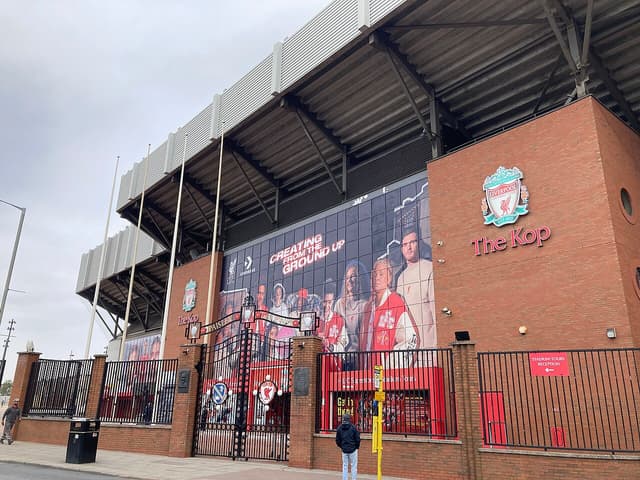
The completion of the Anfield Road End's second tier in autumn 2023 lifted the stadium's capacity from 53,394 to 61,276, adding roughly 7,000 seats and making Anfield the third-largest ground in English football behind Old Trafford and the Tottenham Hotspur Stadium. That followed an earlier Main Stand redevelopment in 2016, which had already added a third tier and taken capacity past 54,000. The Kop, the single-tier home end, holds around 12,390 on its own — still the largest single-tier stand at any English top-flight ground.
"You'll Never Walk Alone" has been the anthem since 1963
Merseybeat group Gerry and the Pacemakers took their cover of the Rodgers and Hammerstein standard "You'll Never Walk Alone" to number one in October 1963. The Kop had already been in the habit of singing along to whatever was topping the charts before kick-off, a tradition tied to the pre-match records played over the Anfield PA. Once the local group's version hit number one, supporters adopted it permanently. Its emotional element only deepened after the 1989 Hillsborough disaster, when the line "walk on, through the wind, walk on, through the rain" took on new meaning for the club's supporter base. The song has since been adopted by clubs from Borussia Dortmund to Celtic and Feyenoord, making it arguably the most widely copied matchday tradition in world football.
The Kop is English football's most famous terrace
Built in 1906, the Spion Kop takes its name from a hill in South Africa where more than 300 men of the Lancashire Regiment died during the Second Boer War, many of them from Liverpool and the surrounding area. A local sports journalist coined the nickname for the new stand after its steep profile reminded him of the hill. At its standing-room peak the Kop held a recorded 28,000 fans, the largest single-tier home end in the English game for much of the 20th century. It was converted to an all-seater stand in 1994 following the Taylor Report, reducing capacity to roughly 12,390, but it kept its name, its single-tier shape, and its reputation as the loudest end in the ground.
Bill Shankly built the modern club from the Second Division up
Bill Shankly took charge on 1 December 1959 of a Liverpool side stuck in the Second Division with an ageing squad and a rundown training ground. Over the next 15 years he won promotion in 1962, delivered the club's first title in 17 years in 1964, added two more league titles, two FA Cups and the UEFA Cup, and retired in 1974 having rebuilt the club from the foundations up. His most lasting legacy might be the "Boot Room", the informal coaching group of Shankly, Paisley, Fagan and Reuben Bennett that went on to supply the next four Liverpool managers through internal promotion. The Shankly Gates at the Anfield Road entrance, inscribed with the opening line of "You'll Never Walk Alone," were unveiled by his widow in 1982 and remain one of the most photographed spots at the ground.
Ten League Cups, more than any other English side
Liverpool's ten League Cup wins are the most of any English club, ahead of Manchester City, Manchester United, Chelsea and Tottenham. The competition, known at various points as the Milk Cup, the Coca-Cola Cup, the Carling Cup and now the Carabao Cup based on sponsor rights became part of Liverpool's identity from 1981 onward, when the club won it four years running under Bob Paisley. The most recent, in 2024, was a 1-0 extra-time win over Chelsea with a squad depleted by injuries; the 2022 final, also against Chelsea, went to a 22-kick shootout after 0-0 in normal and extra time.
The crest: the Liver Bird, the eternal flames, and the Shankly Gates
The current Liverpool badge centres on the Liver Bird, the mythical cormorant-like symbol of the city, dating back centuries. In 1992, twin eternal flames were added to commemorate the 97 supporters who died in the Hillsborough disaster, with the Shankly Gates and the words "You'll Never Walk Alone" arching above. The flames have stayed on every crest redesign since. The Liver Bird itself also appears on the city's coat of arms and on the twin Liver Building towers at the Pier Head, tying the badge directly to Liverpool's civic identity in a way few other English clubs can match.
Gerrard, Rush and the club's all-time records
Steven Gerrard captained the club from 2003 to 2015, scoring 186 goals in 710 appearances and holding the club record for European goals with 41, widely regarded as the standout English midfielder of the Premier League era. Ian Rush remains the all-time leading scorer with 346 goals across two spells between 1980 and 1996, including a record 25 goals in Merseyside derbies. Roger Hunt, a 1966 World Cup winner, sits second on the league-only list with 244 goals. More recently, Mohamed Salah has rewritten the club's modern scoring records, becoming the fastest player to reach 100 Premier League goals for the club. Goalkeeper Ray Clemence's 335 clean sheets across 1967-1981 remain the standing record between the posts.
Ownership & Club Direction
Fenway Sports Group bought the club in 2010 and backed Klopp to deliver
American investment group Fenway Sports Group, led by John W. Henry and Tom Werner, bought Liverpool from Tom Hicks and George Gillett on 15 October 2010 for £300 million, ending a difficult period of leveraged ownership that had pushed the club close to administration. FSG's defining appointment came in October 2015, when Jürgen Klopp arrived to rebuild the squad around signings including Mohamed Salah, Virgil van Dijk and Alisson Becker. Klopp delivered the 2019 Champions League and the 2019-20 Premier League title before stepping down at the end of 2023-24, handing over to Arne Slot, who won the title in his first season in charge. Following a disappointing 2025/26 season, Liverpool confirmed the departure of Arne Slot on 30th May 2026. Liverpool FC confirmed Andoni Iraola agreed a deal to become the club's new head coach ahead of the 2026-27 season.