


Champions League
The UEFA Champions League is the most watched annual club competition in all of Europe, and the trophy every top European club aspires to progress in. This guide covers where the competition came from, how it's structured today, the clubs and records that define it, and where to go if you're ready to attend a match yourself.
On this page
- History and origins
- How the competition works today
- The most successful clubs
- Iconic finals
- Stadiums that define the competition
- The season calendar
- Attending a match
- FAQs
History and origins
The competition began in 1955 as the European Cup, a straight knockout tournament open only to each country's reigning domestic champion. Real Madrid won the first five editions outright, a run that established the trophy's prestige before most of the continent had even played a single match in it. The competition rebranded as the Champions League in 1992, introducing a group stage and, gradually, entry for multiple clubs from Europe's strongest leagues rather than just the champion of each country.
How the Champions League works today
Thirty-six clubs now enter a single league phase, each playing eight matches against different opponents drawn from across the continent. The top eight in the league phase advance directly to the Round of 16. Clubs finishing 9th through 24th enter a knockout play-off round for the remaining spots. From the Round of 16 onward, it's a two-legged knockout format, before a single-match final decides the trophy in May. In comparison the pre-2024 model consisted of 4 teams per group where each team played home and away. This competition had the most fascinating rule that made an away goal a handicap.
The most successful clubs
Real Madrid are the competition's dominant force by a wide margin, with more European Cup and Champions League titles than any other club, spanning from the tournament's earliest years through to the modern era. AC Milan, Bayern Munich, Liverpool, and Barcelona round out the clubs with the deepest history in the competition, each with multiple triumphs across different eras of the tournament's evolution.
Iconic Champions League finals
Some finals have become part of football folklore well beyond the fanbases directly involved:
- Manchester United 2-1 Bayern Munich, Camp Nou, 1999, decided by two stoppage-time goals after Bayern had led for almost the entire match.
- Liverpool 3-3 AC Milan, Ataturk Stadium, 2005, a comeback from three goals down at half-time, won by Liverpool on penalties.
- Chelsea 1-1 Bayern Munich, Allianz Arena, 2012, won by Chelsea on penalties on Bayern's own ground.
- Real Madrid 3-1 Liverpool, NSC Olimpiyskiy, 2018, part of Real Madrid's run of three consecutive titles.
- Paris Saint-Germain 5-0 Inter Milan, Allianz Arena, 2025, completing PSG's first ever Champions League triumph as part of a historic treble.
Stadiums that define the Champions League
Certain grounds have become synonymous with big European nights: the Santiago Bernabeu in Madrid, the San Siro shared by AC Milan and Inter, Anfield in Liverpool, and Signal Iduna Park in Dortmund all carry a reputation that extends well beyond their regular league fixtures, largely built through decades of Champions League nights.
The season calendar
- League Phase (Matchdays 1 to 8): September to January
- Knockout Phase Play-Offs: February
- Round of 16: March
- Quarter-Finals: April
- Semi-Finals: late April to May
- Final: May
Attending a UCL match
League-phase fixtures offer the most accessible way to experience a Champions League night, with a full calendar of matches across the autumn and early winter. Knockout football, and above all the final, requires booking as early as possible once a draw is confirmed, since demand and price both climb sharply as each round approaches full time. For a full breakdown of pricing patterns and booking timing, see the dedicated Champions League tickets guide.
The Champions League has grown from a straight knockout between domestic champions into a 36-club league-phase competition, but its core appeal, one trophy, one final, decades of history behind every fixture, has never changed. League-phase matches remain the easiest entry point, while the final remains the hardest ticket in European club football.
UEFA Champions League Records
Champions League Title Winners
Real Madrid | 15
AC Milan | 7
Liverpool | 6
Bayern München | 6
Barcelona | 5
Ajax | 4
Inter Milan | 3
Chelsea | 2
Juventus | 2
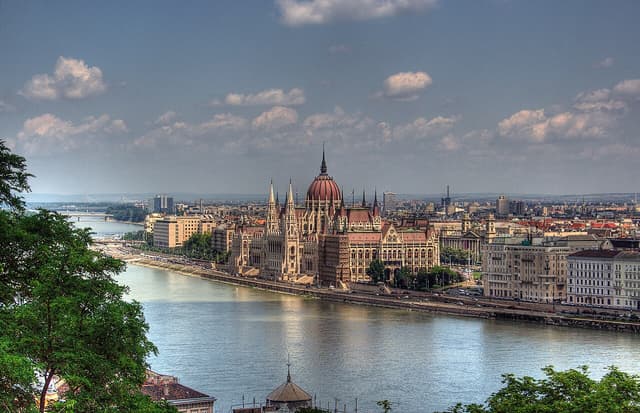
Paris Saint-Germain are the reigning champions heading into 2026/27, having beaten Arsenal on penalties in Budapest in May 2026 to win back-to-back titles, the club's first two European Cups.
Note: AC Milan (7), Benfica (2), Nottingham Forest (2) and Porto (2) also sit among the multiple-time winners.
Records for Players
Goals
All-time top scorer: Cristiano Ronaldo - 140 goals (Manchester United, Real Madrid, Juventus). Ronaldo is the only player to reach 100 Champions League goals for a single club, with 105 of his total coming for Real Madrid
Most goals in a single season: 17 - Cristiano Ronaldo, Real Madrid, 2013/14
Most goals for a single club: 120 - Lionel Messi, Barcelona
Fastest goal in Champions League history: 10.12 seconds - Roy Makaay, Bayern München vs Real Madrid, March 2007
Youngest goalscorer: Ansu Fati, 17 years and 40 days (Barcelona, vs Inter Milan, 2019/20)
Oldest goalscorer: Pepe, 40 years and 254 days (Porto, 2023) - the first player to score in the competition after turning 40
Assists
All-time assists leader: Ryan Giggs - 41 assists, Manchester United (Cristiano Ronaldo is close behind on 40; assist tallies vary slightly by data provider since the Champions League only started tracking assists officially partway through its history)
Most Champions League titles won by a player: 6 - a feat shared by five Real Madrid players, starting with Paco Gento (1956-1966) and matched more recently by Toni Kroos, Luka Modrić, Nacho and Dani Carvajal
Most assists in Champions League finals: 3 - Andrés Iniesta, the only player to set up a goal in three different finals
Appearances
Most appearances: 177 - Iker Casillas, Real Madrid and Porto, between 1999 and 2019
Most finals reached by a club: 18 - Real Madrid
Most seasons scored in: 18 consecutive - Lionel Messi (2005/06 onwards) and Karim Benzema, a joint record
Goalkeeper Clean Sheets (no goals conceded in match)
Most clean sheets: 62 - Manuel Neuer, Schalke and Bayern München (Iker Casillas is second with 57)
Longest run of consecutive clean sheets: 8 matches - Jens Lehmann, Arsenal, 2005/06
Clubs & Seasons Records
Biggest win: 8-0, achieved twice - Liverpool vs Beşiktaş (2007) and Real Madrid vs Malmö (2015)
Most goals in a single match: 11 - Bayern München 9-2 Dinamo Zagreb, September 2024
Biggest final win: 5-0 - Paris Saint-Germain vs Inter Milan, 2025 final in Munich
Most consecutive title wins: 5 - Real Madrid, 1955/56 to 1959/60 (still the record; Real Madrid also won three in a row from 2015/16 to 2017/18)
Fastest goal in a final: 51 seconds - Paolo Maldini, AC Milan vs Liverpool, 2005
UEFA Champions League Individual Honours
There's no dedicated Hall of Fame for the Champions League, however UEFA does track its own season-defining honours:
Most UEFA Best/Men's Player in Europe awards: 4 - Cristiano Ronaldo (2008, 2014, 2016, 2017)
Most appearances in UEFA.com's Team of the Year: 15 - Cristiano Ronaldo (2004, 2007-2020)
Champions League Top Scorer - Notable Winners
The Champions League doesn't have an official "Golden Boot" trophy, however UEFA does crown a top scorer every season.
- Cristiano Ronaldo - top scorer a record 7 times, including 6 in a row between 2012/13 and 2017/18
- Lionel Messi - top scorer 6 times
- Between them, Ronaldo and Messi have won the competition's top scorer honour 13 times
By the Numbers - Champions League at a Glance
- 1955, the year the competition was founded as the European Cup (rebranded the UEFA Champions League for the 1992/93 season)
- 71 seasons completed heading into 2026/27
- 200+ territories the Champions League final is broadcast in
- 140 - Cristiano Ronaldo's all-time goals record
- 41 - Ryan Giggs' all-time assists record
- 15 - Real Madrid's record number of Champions League titles
- 8-0 is the joint-record biggest victory margin, achieved twice
- 36 clubs now compete in the league phase each season, following the 2024/25 format change from the old group stage
FAQs
How many clubs currently compete in the Champions League?
Thirty-six clubs enter the league phase each season, drawn from across UEFA's member associations based on domestic league performance from the previous season.
Which club has won the most Champions League titles?
Real Madrid, by a clear margin, with a trophy count spanning the competition's earliest years as the European Cup through to the modern era.
When did the European Cup become the Champions League?
The competition rebranded in 1992, introducing a group stage format and gradually expanding entry beyond a single champion per country.
What's the difference between the league phase and the old group stage?
The league phase, introduced in 2024/25, has every club play eight different opponents in a single combined table, replacing the previous format of small eight-group sections of four teams each.
Where can I buy tickets for a Champions League match?
See the dedicated Champions League tickets guide for pricing patterns, booking timing, and how to secure a seat for any round.
Explore more
Head back to the football tickets hub for every European league and competition, or go straight to the Champions League tickets guide to book your seat.